
Consulting in International Trade: The Real Cost of Mistakes
Entering a new market is always about opportunity. But alongside those opportunities comerisks that are rarely visible at first glance. The most expensive of these are not logistics oreven taxes. The most expensive are the mistakes that could have been avoided at thepreparation stage.
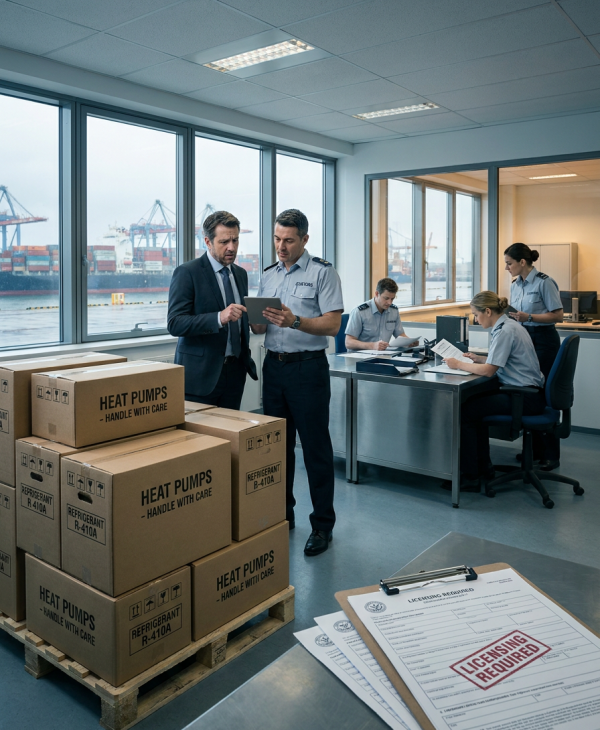
A recent example from our practice involved the import of heat pumps into Ukraine. Thesupplier failed to take into account licensing requirements related to the use of refrigerants(freon).
As a result, the goods were stopped at customs and returned. This led not only todirect transportation costs in both directions, but also to lost time, missed deadlines, andstrained relationships with the partner.
Yet such risks are entirely predictable at the planningstage—provided that professionals with a clear understanding of local regulations and howthey are applied in practice are involved early on.
At the same time, it is essential to consider more than just customs requirements. Theexpectations of the end user, national technical standards, operating conditions, and even thespecifics of the installation site all play a critical role.
For example, equipment intended forindustrial facilities, hospitals, or shelters often comes with additional requirements related tocertification, safety, materials, and installation.
If these factors are not addressed in advance, even perfectly executed logistics will not prevent delays or rejection by the client.

A telling case involved a European company that decided to test the Ukrainian market byimporting a small batch of products intended for bomb shelters.
The first shipment clearedcustoms without issue. However, the next commercial batch was stopped due to missingdocumentation.
Formally, the issue was eventually resolved—but valuable time was lost. Theend client required a full set of technical documentation and certification подтверждений, which had not been prepared in advance.
The result was a lost tender and a missed majorcontract. Only after this did the company turn to us. Our analysis showed that all requireddocumentation could indeed be obtained—but not overnight.
It required a structured processof preparation, approvals, and translation. The conclusion is straightforward: these mattersmust be planned before the first shipment, not after the first problem arises.
We have also seen the opposite scenario. A Ukrainian food producer spent considerable timeand resources attempting to enter the EU market, but without success.
The reason turned outto be less obvious: European distributors were not willing to take on the responsibility forimport procedures and customs clearance. For them, this meant additional time, risk, andoperational burden.
After restructuring the cooperation model—delivering goods with allduties paid and involving us in the process—the products successfully entered supermarketshelves.

Across all these cases, one common factor stands out: a lack of deep understanding of thelocal market at the outset. It is not enough to know the rules—it is crucial to understand howthey work in practice. This is why having a trusted local representative is not an expense, butan investment in predictability. Someone who understands the regulatory environment, seesthe real market dynamics, and can prevent problems before they arise.
When entering new markets, our clients receive comprehensive support: market analysis, marketing strategy, logistics planning, customs clearance, physical representation in Ukraineand the EU, and support in negotiations with key partners. When these elements worktogether, a business gains not just access to a new market, but a clear and manageable growthmodel.
Looking to enter a new market without costly mistakes? Contact us—and let’s do itright, from the very start.